Can You Mow a Wet Lawn After Heavy Rain in Asheville
Mowing a wet lawn after heavy rain is usually worth postponing. The important question is not just whether the rain has stopped, but whether the grass and the soil underneath it are ready for mowing equipment.
For Asheville-area homeowners and property managers, that means checking actual lawn conditions rather than sticking to a scheduled mowing day. Grass can look dry while the soil remains soft enough for tires to leave ruts. Conversely, light moisture on the blades does not necessarily mean the ground is saturated.
Here is how to decide whether to mow, when to wait, and what to do if rainy weather leaves your lawn taller than usual.
## Check the Grass and the Ground Separately
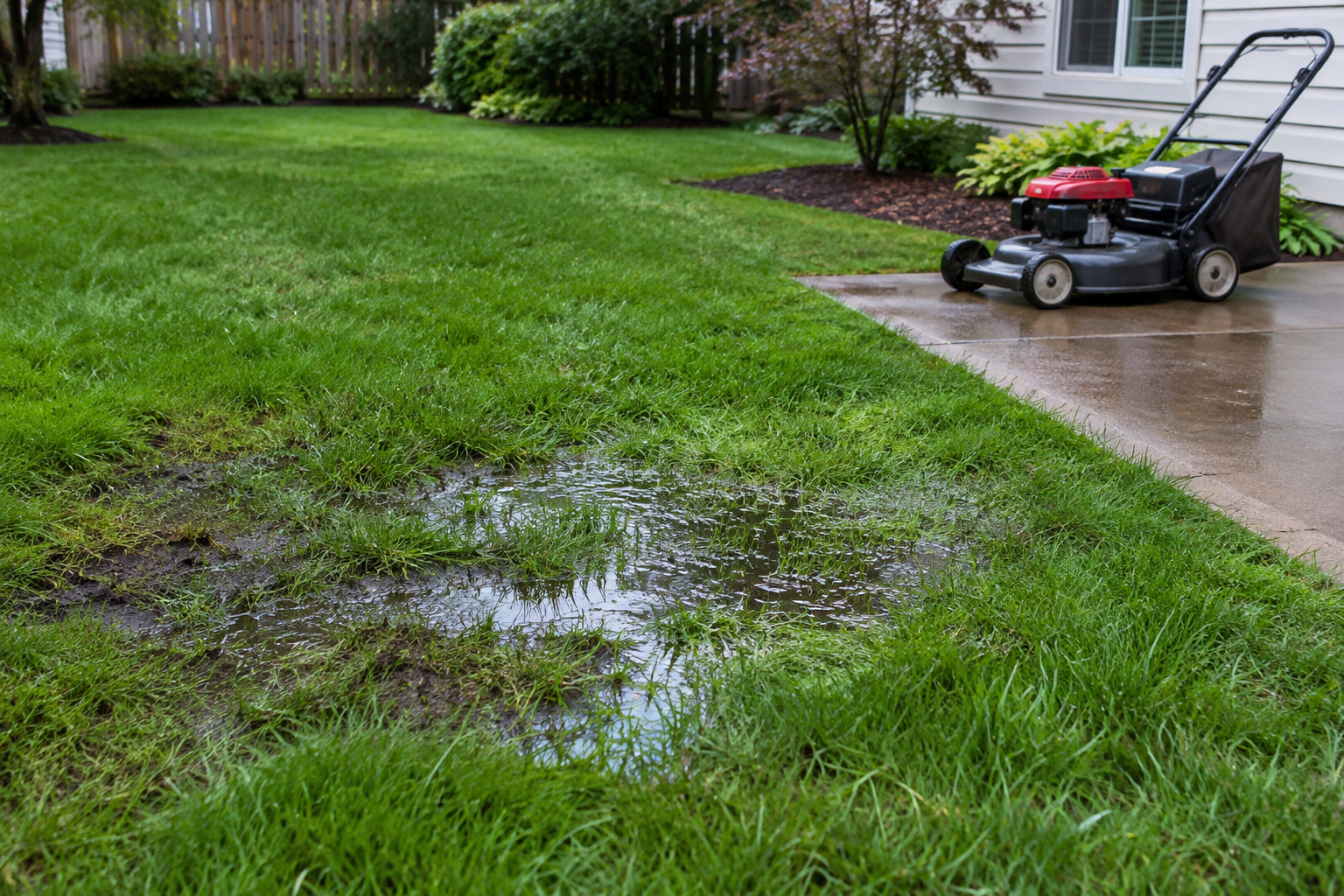
After heavy rain, a lawn needs two checks: one for moisture on the grass and another for the firmness of the soil.
Wet blades can bend, stick together, and collect in clumps instead of cutting and dispersing evenly. Soft ground creates a different problem: mowing equipment can press into it, leaving tracks or disturbing the turf.
Before bringing out the mower, walk a small, relatively level section of the lawn. Avoid entering standing water or testing a slippery slope. Look for these signs:
-Visible water: Puddles or water collecting around your shoes mean the area is not ready.
-Squelching or sinking: If each step squeezes water upward or leaves a deep impression, postpone mowing.
-Wet, matted grass: Blades that stick together or readily soak your shoes may not cut cleanly.
-Soft spots: Check low areas, shaded sections, and places where water runs through the yard, not just the driest patch near the driveway.
A footprint in the grass alone is not a definitive test. The more important warning is an impression in the soft soil underneath it.
## Why Mowing Too Soon Can Create More Work
### Tire ruts and soil damage
A mower can leave grooves in wet ground, especially when turning or repeatedly following the same path. Saturated or soft soil is also more vulnerable to compaction from traffic. Repairing damaged turf can take more effort than delaying a mowing visit.
Do not drive across a soft area simply to reach a dry section of the yard. Access routes matter as much as the area you intend to cut.
### Uneven cutting and heavy clippings
Wet grass often bends away from the blade or sticks together. That can produce an uneven finish and leave clumps behind. Heavy clumps should not remain piled on the lawn, where they can cover the grass beneath them.
Repeated passes to improve the appearance may make matters worse if the ground is still soft. Waiting for better conditions is generally preferable to trying to correct a poor wet-weather cut.
### Reduced traction
Wet grass can be slippery for both people and equipment. Slopes deserve particular caution, even if a level section seems manageable. Follow the mower manufacturer's instructions for wet conditions and slope limits; a lawn check is not a substitute for those restrictions.
Never clear a clogged discharge opening or reach beneath a mower while it is running. Follow the equipment manual's shutdown and servicing procedures.
## How Long Should You Wait After Heavy Rain?
There is no reliable waiting period that applies to every lawn. A set number of hours after rainfall cannot tell you whether the soil is firm enough to support a mower.
Drying depends on conditions such as sunlight, airflow, shade, soil characteristics, and how much water collected in the yard. An open section may become mowable before a shaded side yard or low spot.
For properties around Asheville and Hendersonville, use the next potential mowing window to reassess the lawn rather than assuming the whole property has dried evenly. Check the areas that stayed wet longest, along with any route the equipment must travel.
A reasonable decision process is:
1. Confirm there is no standing water in the area to be mowed.
2. Check that walking does not cause sinking, squelching, or deep soil impressions.
3. Look for grass that is dry enough to separate rather than mat together.
4. Confirm that slopes and access routes are suitable under the equipment's operating instructions.
If conditions are borderline, waiting is the more cautious choice. If mowing begins and tires leave ruts or traction becomes uncertain, stop rather than finishing at the expense of the lawn.
## What if the Grass Gets Too Tall While You Wait?
An overgrown lawn can be frustrating, but mowing saturated ground is not a useful shortcut. Once conditions improve, avoid trying to restore the usual height in one aggressive cut.
As a general mowing guideline, aim to remove no more than about one-third of the grass blade at a time. The appropriate finished height depends on the grass type, so there is no single mower setting that fits every property.
If the lawn has grown substantially taller:
- Start with a higher cutting setting appropriate for the grass and equipment.
- Avoid scalping high spots or forcing the mower through an excessive amount of growth.
- Address heavy clipping clumps once it is safe to do so.
- Return toward the normal mowing height gradually as growth and ground conditions allow.
For a lawn on a recurring service schedule, discuss how rain delays and extra growth will be handled. The goal should be a workable adjustment, not a promise to mow regardless of conditions.
## Can You Mow Only the Dry Areas?
Sometimes, but only if those areas can be reached without crossing soft ground and can be mowed safely. Partial mowing may make sense when a clearly separated section is dry while another remains wet.
It is less useful when equipment must repeatedly cross saturated strips or turn in soggy corners. Do not assume a smaller mower automatically solves the problem; lighter equipment can still mark soft ground or lose traction.
Weed eating is not an automatic substitute, either. Walking and trimming on wet slopes can still present footing problems, and trimming does not correct saturated soil.
## When Recurring Wet Spots Need a Different Conversation
If the same part of the lawn repeatedly stays wet after the surrounding turf dries, treat that as a separate maintenance issue. More frequent mowing will not resolve the reason water is lingering.
Note where water collects, whether runoff crosses the area, and whether irrigation operates while the ground is already wet. Photos taken from a safe, dry location after rainfall can help explain the pattern during a maintenance discussion.
Orion Lawn Care & Maintenance lists water management and irrigation system design, installation, and maintenance among its [lawn and landscape services]\([https://orionlawnservice.com/services](https://orionlawnservice.com/services)). A recurring wet area is worth raising alongside mowing needs, without assuming that every drainage concern has the same cause or solution.\
## Frequently Asked Questions
### Can I mow if the grass is dry but the soil is still wet?
Wait if the soil is soft enough to squelch, sink, or develop ruts. Dry blades do not mean the ground can support mowing equipment without damage.
### Is mowing grass with morning dew the same as mowing after heavy rain?
Not necessarily. Dew wets the blades without necessarily saturating the soil. However, it can still affect cutting quality and traction. Check both the grass and ground, and follow the mower's operating instructions.
### Should I lower the mower to catch up after a rain delay?
No. Cutting unusually tall grass too short in one pass can stress it. Once the ground is suitable, begin at a higher appropriate setting and work back toward the normal height gradually.
### Should a mowing visit be delayed because of rain?
A delay can be appropriate when the lawn is saturated, slippery, or likely to rut. Ask your provider how weather-related schedule changes and uneven drying across the property will be handled.
## Plan Mowing Around Lawn Conditions
Orion Lawn Care & Maintenance provides mowing and routine lawn care for homeowners and businesses in Asheville, Hendersonville, and surrounding Western North Carolina communities, with care tailored to individual lawn needs and customer preferences.
If rain delays or recurring wet areas are making maintenance difficult, [request a Free Quote]\([https://orionlawnservice.com/free-quote](https://orionlawnservice.com/free-quote)) and describe the parts of your property that stay wet, along with your routine mowing needs.
