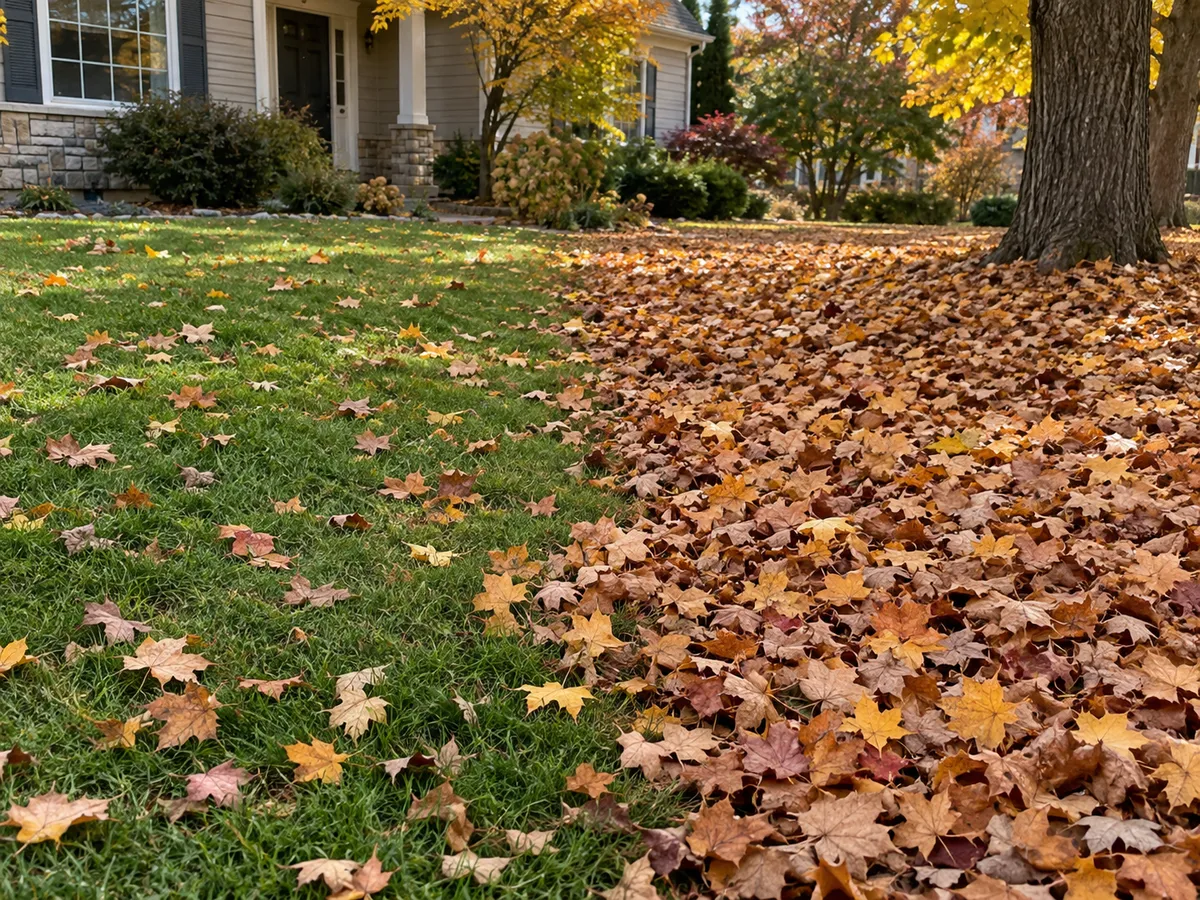
Should You Mow Over Fall Leaves or Remove Them From Your Asheville Lawn?
A light scattering of dry leaves may be manageable with a mower. A thick, wet layer that hides the grass usually needs removal first. Deciding whether to mow over leaves or remove them depends on whether your mower can break them into small pieces without leaving the lawn covered.
For Asheville-area homeowners and property owners, the best fall lawn care approach is to assess conditions each time rather than commit to mulching every leaf or removing every leaf. Different areas of the same yard may need different treatment.
When Mowing Over Leaves Makes Sense
Mowing over leaves, often called leaf mulching, can work when the layer is light, the leaves are reasonably dry, and the grass remains visible throughout the area. The goal is to chop leaves into small fragments that settle between grass blades rather than form a new covering on top.
Before you mow over leaves, check that:
Leaves are loose rather than stuck together in a damp mat.
You can see grass through the leaf layer.
The ground is firm enough for mowing without leaving ruts.
Your mower is suitable for mulching and can be used according to its manufacturer's instructions.
Try mowing a small section first. After the mower passes, look at the lawn rather than just the material coming out of the mower. Grass should still be exposed, with small leaf pieces distributed throughout the turf.
If the result is piles, strips, or largely intact leaves, do not assume more passes will solve the problem. Remove some of the material and reassess.
When You Should Remove Leaves Before Mowing
Removing leaves is the better starting point when they create a continuous blanket over the lawn. Heavy leaf coverage can block sunlight, hold moisture against the grass, and make mowing difficult.
1. The Grass Is Hidden Under Leaves
If you cannot see the lawn beneath the leaves, there is too much material to treat like ordinary mowing debris. Rake or collect the bulk before considering whether the remaining leaves can be mulched.
Pay particular attention to accumulations beside fences, at the bottom of slopes, and around planting beds. One exposed section of lawn does not mean the entire property is ready to mow.
2. Leaves Are Wet and Matted
Wet leaves tend to stick together instead of breaking apart cleanly. They can also make footing slippery.
If leaves are simply damp and the grass is still visible, waiting for drier conditions may be enough.
However, if they have formed a thick mat, remove the covering rather than repeatedly driving a mower across it. Avoid mowing when the soil is soft enough to leave ruts.
3. Mowing Leaves Creates a Thick Layer of Fragments
Small leaf pieces can still be excessive. If shredded leaves cover the grass after mowing, the job has changed the size of the debris without resolving the coverage problem.
Collect the excess material. The practical test is whether grass remains visible, not whether all the leaves have technically been chopped.
The Best Approach: Combine Leaf Mulching and Removal
You do not have to choose one method for your entire property. Removing heavy accumulations and mowing over a light remainder can be more effective than trying to mulch everything.
Follow these five steps:
Inspect your lawn. Identify thick leaf piles, damp patches, hidden debris, and soft ground.
Remove heavy leaf buildup. Focus on areas where fallen leaves have buried the grass.
Test a small section. Mow over leaves only when conditions and equipment are suitable.
Check the results. Look for exposed grass, evenly scattered fragments, and no heavy clumps.
Collect excess material. Avoid repeated mowing solely to force more leaves into the turf.
This combination approach is especially useful when neighboring trees or different sections of your landscape drop leaves at different times.
Judge the current leaf coverage rather than following a fixed calendar date.
Common Mistakes When Mowing Over Fall Leaves
Cutting Grass Too Short to Mulch More Leaves
Leaf cleanup should not dictate an unusually low mowing height.
Keep the cutting height appropriate for your grass type rather than lowering the mower deck to process debris.
If your lawn does not need cutting and the leaves are too heavy to leave in place, collecting them may be a better solution.
Mowing Over Hidden Sticks and Debris
Check beneath leaf piles before using lawn equipment.
Branches, stones, and other objects can disappear under fallen leaves. Remove visible obstacles and follow your mower manufacturer's safety guidance.
Blowing Every Leaf Into Planting Beds
Moving a thick leaf blanket off your lawn does not automatically make it suitable for garden beds.
Avoid burying low-growing plants or piling material against shrub stems and tree trunks. Planting beds need their own assessment rather than becoming the default destination for everything collected from the grass.
Ignoring Weather and Ground Conditions
For properties in Asheville and Hendersonville, a useful fall lawn care routine includes checking both leaf coverage and moisture.
An otherwise manageable leaf layer can become harder to handle after rain.
When possible, address loose leaves before they become matted, but avoid rushing onto saturated ground to finish the cleanup.
When to Hire a Professional for Fall Leaf Cleanup
Handling a light leaf layer yourself may be straightforward. Professional lawn care becomes worth considering when heavy accumulation, difficult access, or a large property makes it difficult to keep grass uncovered.
Orion Lawn Care & Maintenance provides mowing, routine lawn care, seasonal cleanups, and landscape maintenance for homeowners and businesses in Asheville, Hendersonville, and surrounding Western North Carolina communities.
Explore our lawn care and landscape maintenance services to discuss a maintenance approach suited to your property's needs.
When requesting leaf cleanup, describe:
Whether leaves cover the entire lawn or collect in specific areas.
Whether the leaves are dry, wet, or matted.
Whether the lawn also needs mowing.
Whether you need collection and handling of removed leaves.
Ask which cleanup activities are included in the service rather than assuming every maintenance visit covers the same work.
Frequently Asked Questions About Mowing Leaves
Is mowing over leaves better than raking them?
Neither method is always better. Mowing over leaves can work when they are dry and lightly scattered across the grass. Raking or collecting leaves is more appropriate when heavy buildup covers the lawn or prevents effective mulching.
Can I mow over wet fall leaves?
It is generally better to wait until leaves are drier and the ground is firm. Wet leaves can form clumps instead of shredding evenly, while mowing on soft soil can create ruts. Thick, matted leaves may need removal.
Should I wait until all the leaves have fallen before cleaning my lawn?
Not necessarily. If accumulated leaves already cover the grass, it may be better to address them before additional buildup occurs. Base your cleanup schedule on leaf coverage and lawn conditions rather than waiting for every tree to finish shedding.
What if only part of my lawn has heavy leaf coverage?
Treat those areas separately. Remove thick accumulations first, then determine whether lighter leaf coverage in other sections can be safely mulched into small, evenly distributed pieces.
Will mowing over leaves damage my grass?
Mowing over a light layer of dry leaves generally does not create the same coverage problem as leaving a thick blanket on the lawn. However, excessive shredded leaves can still block light and keep grass covered. Check the lawn after mulching and remove excess material when necessary.
Keep Your Asheville Lawn Clear and Well Maintained This Fall
Knowing when to mow over leaves and when to remove them helps you make practical lawn care decisions throughout the fall season.
Light, dry leaves may be suitable for mulching, while thick, wet, or matted layers usually require removal before mowing.
Need help managing fallen leaves alongside routine lawn care?
Request a Free Quote from Orion Lawn Care & Maintenance to discuss your Asheville or Hendersonville property and the seasonal maintenance work needed.
